How do you align projects to corporate goals during a period of sustained disruption and uncertainty? In 2026, the challenge for Chief Officers is arguably greater than at any point in modern business history.
The New Landscape of Disruption
The geopolitical and geoeconomic landscape continues to reshape global markets. Organisations are operating in an environment where certainty is increasingly rare, driven by several compounding factors:
- • Trade tensions and evolving tariff regimes between major economies.
- • Regional conflicts and energy security concerns.
- • Escalating cyber threats and climate-related events.
- • AI-driven disruption and changing workforce expectations.
- • Continuing pressure on global supply chains and logistics.
Many of these challenges remain largely invisible to project teams until they impact schedules, budgets, resources, or stakeholder expectations. Yet amidst this uncertainty, one factor remains critical to organisational success: corporate-wide alignment.
The Imperative of Corporate-Wide Alignment
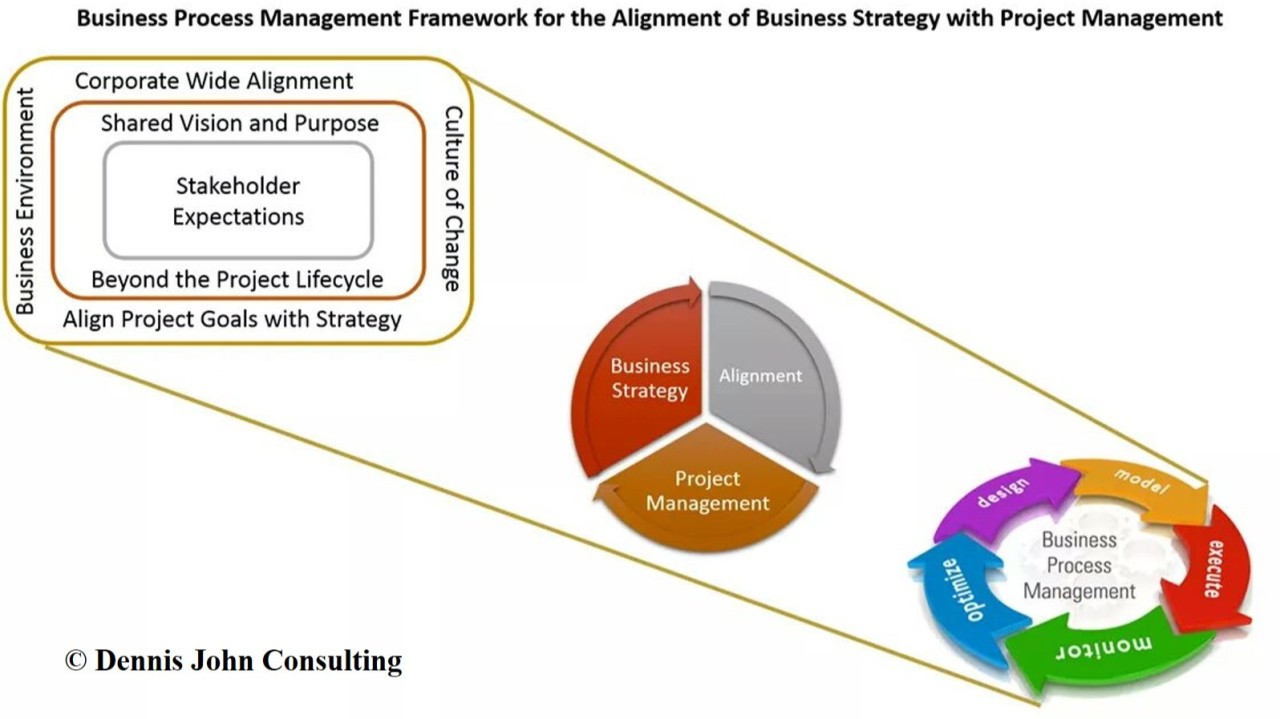
Corporate-wide alignment is essential for every successful modern organisation. The Board of Directors and Chief Officers must establish a clear vision, mission, and corporate strategy that provides direction during uncertainty. Chief Transformation Officers, Chief Change Officers, and leaders responsible for project management, business processes, and organisational change must ensure that projects remain aligned with that strategic direction.
These responsibilities must work hand in glove and remain fully congruent with one another. Stakeholder expectations must be clearly defined, continuously reviewed, and aligned with the organisation's vision, purpose, and strategic objectives. In a volatile business environment, alignment is not a one-time event—it is an ongoing leadership discipline.
Culture Change Takes Time
One of the greatest challenges facing modern organisations is that culture change takes considerably longer than change management initiatives. Professor John Kotter, Founder of Kotter International, has consistently reminded leaders that "transformation takes time." As a student of John Kotter's work and after more than forty years of managing projects, I would suggest that transformational culture change often takes even longer than most organisations anticipate.
History provides us with valuable lessons. In his 1995 book The Road Ahead, Bill Gates outlined a vision of the paperless office. More than thirty years later, significant progress has been made through digital technologies, cloud computing, and artificial intelligence, yet many organisations still rely on paper-based processes. Cultural habits often outlast technological innovation.
However, meaningful progress is evident. Within the NHS, digital prescriptions have transformed the patient experience. Many patients now receive prescriptions electronically without handling a physical paper form. Thousands of administrative processes have been streamlined while contributing to sustainability goals. This demonstrates that sustained culture adjustment, supported by technology and leadership commitment, can create transformational change that benefits both organisations and society.
Defining Project Success in 2026
Successful project management in 2026 requires complete alignment with corporate strategy—not merely business strategy. Project portfolios must support organisational purpose, resilience, growth objectives, technological innovation, sustainability commitments, and stakeholder value creation.
This alignment framework must permeate every level of the organisation. Project teams must understand not only what they are delivering, but why they are delivering it. Every project should maintain a clear line of sight to strategic objectives and measurable business outcomes.
Within the quality management profession, business processes remain a central organising principle. Viewing the organisation through a process lens helps leaders understand how value is created, how risks emerge, and how projects contribute to enterprise-wide performance. Projects should not exist in isolation; they should strengthen and optimise the broader organisational system.
The Strategic Necessity
We are living through one of the most significant transformation cycles since the Industrial Revolution. Artificial intelligence is redefining industries, business models are evolving at unprecedented speed, and organisations are being challenged to adapt continuously.
Yet despite the volatility, some organisations continue to demonstrate the power of corporate-wide alignment. Companies that successfully integrate strategy, innovation, stakeholder expectations, technology adoption, and disciplined project execution are consistently outperforming their competitors.
In 2026, project success is no longer measured solely by delivering on time, within budget, and to specification. True success is achieved when projects create strategic value, support organisational resilience, strengthen culture, and advance the long-term vision of the enterprise.
The organisations that thrive in this decade will be those whose leaders can align people, processes, technology, and projects around a common purpose—even when the external environment remains uncertain.
Share this article
Enjoyed this article?
Subscribe to get new posts delivered straight to your inbox. No spam, ever.
0 Comments
No comments yet. Be the first to share your thoughts!
Leave a Comment
Sign in to comment, or fill in your details below.